Bangladesh’s Law-and-Order Moment Ahead of the 2026 Election: What’s Happening, and Why the Legal Framework Matters

Abu Rahat Murshed Kabir | 21 December 2025

Bangladesh is entering an election season under the shadow of a question that is never merely technical: who can guarantee public safety without turning public order into political control? In January 2026, the security conversation has sharpened in ways that are difficult to ignore. Reports point to heightened concern about unrest, threats surrounding diplomatic facilities, and anxiety about violence as the February 12, 2026 general election approaches.

At the same time, this is not simply a story about street-level volatility. It is also a story about institutions and law: the constitutional promises Bangladesh makes to citizens, the statutory powers the state gives to police and security agencies, and the legal tests that determine when “maintaining order” becomes an excuse to shrink civic space. If you want to understand Bangladesh’s law-and-order reality today, you have to look at both layers together.

The present security climate: fear, uncertainty, and the politics of protection

In late January 2026, international attention has focused on security warnings connected to Bangladesh. Reuters reported that India decided to withdraw families and dependents of its diplomats from Bangladesh due to “mounting security concerns” ahead of the election. Separately, reporting has described repeated protests and disruption, including fear among international students and the destabilizing effects of shutdowns and unrest.

There are also claims and counterclaims about the capacity of the state to control violence. A recurring theme in recent coverage is the possibility of weapons circulating outside state control and the fear that political competition may become more violent in the run-up to voting. Even if you treat every such report with caution, the basic pattern is clear: public order is becoming a political issue because it affects the credibility of the electoral environment.

The constitutional baseline: Bangladesh’s promise of rights, and the state’s duty to protect

Bangladesh’s Constitution is not silent on public order. It anchors a citizen’s expectation that the state must both protect life and liberty and ensure that government power is exercised “in accordance with law.” Article 32 states that no person shall be deprived of life or personal liberty save in accordance with law.

That sounds straightforward, but in periods of tension it becomes the core dispute: what counts as “in accordance with law” when police are dispersing protests, when preventive detention is invoked, or when speech-related security laws are enforced? The constitutional idea is not that the state can never act strongly. It is that strong action must be legally grounded, proportionate, and reviewable.

The Constitution also recognises assembly rights, subject to “reasonable restrictions” in the interests of public order and other aims. This is the classic democratic balancing act: allow peaceful participation while restricting violence and threats. The practical challenge is how often, and how loosely, restrictions are used.

Policing powers: old statutes, modern realities

Bangladesh’s policing structure still rests heavily on colonial-era legal frameworks, including the Police Act, 1861. That matters because statutes shape supervision and discipline, and they define how force is organised. The Police Act’s design assumes a model of administrative control and a chain of command oriented toward maintaining order. In a modern democracy, that model must coexist with constitutional rights and judicial scrutiny.

Then there is criminal procedure: the Code of Criminal Procedure, 1898 (CrPC), still central to arrests, searches, investigations, and magistrate oversight. During unrest, the real-world effect is immediate. Questions such as “Was the arrest lawful?” or “Was detention extended properly?” or “Was a search conducted with required safeguards?” determine whether order is being maintained through law or through fear.

Elections and legitimacy: why “law and order” is never neutral

In an election context, “law and order” rhetoric tends to do two things at once:

  1. It can be a genuine call for security so citizens can vote without intimidation.

  2. It can become a political instrument to restrict opponents, choke assembly, or criminalise protest.

Bangladesh’s recent political transitions heighten that tension. Reporting has described the interim government’s political decisions, including a ban on activities of the Awami League under the Anti-Terrorism Act in 2025, illustrating how security law can be used in high-stakes political moments.

None of this automatically tells you whether a given action is justified. It does tell you what citizens should ask: What is the legal basis? Is it time-limited? Is there due process? Can courts review it? Are the rules being applied evenly?

The danger zone: when “public order” crowds out “public trust”

Public order is not only the absence of violence. It is also the presence of legitimacy. A state can reduce street disorder temporarily through heavy-handed tactics, but if people conclude that police power is partisan, the state may be creating future instability.

This is where constitutional rights matter most. Article 32’s promise of liberty “in accordance with law” is not just a phrase. It is supposed to function as a brake. When citizens fear arbitrary arrest, or when people believe speech laws are used selectively, they stop trusting the system, and they stop cooperating with it.

What to watch: five legal questions that will define the months ahead

If you’re tracking Bangladesh’s law-and-order trajectory toward the February 2026 election, the most useful lens is legal and procedural:

  1. Use of arrest and remand: Are CrPC powers used narrowly and with documented grounds, or broadly to disrupt opponents?

  2. Management of assemblies: Are restrictions tailored to violence risk, or used to suppress peaceful mobilisation?

  3. Preventive measures: Is preventive detention invoked, and if so, are constitutional safeguards followed?

  4. Anti-terror framework: Are “national security” claims tied to credible threats or stretched to cover ordinary political activity?

  5. Digital enforcement: Are cyber laws used to curb incitement and disinformation, or to silence critics?

Bangladesh’s present moment is not just a security problem. It is a constitutional test. And in constitutional tests, the details matter: legal basis, proportionality, oversight, and equality before the law.

ECONOMIC DISRUPTION AND ACCELERATION OF CORRUPTION DURING THE TRANSITIONAL PERIOD

Mohammd Zahin

Bangladesh’s economy entered the post–5 August phase carrying unresolved vulnerabilities: foreign reserve depletion, inflation, banking-sector fragility, and investor uncertainty. Transitional instability magnified these issues, creating fertile ground for corruption, market manipulation, and economic exploitation.

This article analyzes how the governance crisis intensified economic hardship, institutional corruption, and uneven wealth extraction.

1. Vulnerable Economic Foundations Before the Transition

Years of structural economic weaknesses left Bangladesh exposed:

  • Banking scandals had already eroded public confidence

  • Government borrowing and debt obligations increased

  • Foreign investment slowed due to political uncertainty

  • Inflation rose due to global shocks and local mismanagement

  • Trade deficits widened

These conditions meant any political transition—peaceful or turbulent—would create economic aftershocks.

2. Market Shock After 5 August: Immediate Economic Effects

Immediately after the transition:

  • Liquidity tightened as depositors withdrew savings

  • Importers faced delays in LCs due to currency instability

  • Business confidence declined sharply

  • Transport disruptions increased logistical costs

  • Prices of essentials skyrocketed

These were not intentional outcomes but rather the natural consequences of uncertainty and weakened administrative control.

3. Rise of Opportunistic Market Manipulation

In periods of instability, markets become easier to exploit.

a. Syndicates Accelerated Price Manipulation

  • Artificial shortages of rice, oil, sugar

  • Hoarding of basic commodities

  • Rapid price hikes in both retail and wholesale markets

  • Smuggling of essentials across borders

Weak market monitoring allowed syndicates to operate with impunity.

b. Corruption in Subsidy and Relief Distribution

Reports indicated:

  • Misallocation of relief goods

  • Local-level political capture of food aid

  • Bribes demanded for access to social safety nets

  • Diversion of subsidized goods into black markets

Such corruption intensified public frustration.

c. Banking Sector Instability

Banks experienced:

  • Increased non-performing loans

  • Poor oversight as regulatory attention shifted to political stability

  • Collusion in loan approvals

  • Money laundering through under-invoicing and over-invoicing

Financial institutions became vulnerable to predatory behavior.

4. Breakdown of Revenue Systems and the Rise of Informal Extraction

Customs and Ports

Corruption surged due to:

  • Reduced central oversight

  • Officers exploiting confusion

  • Rise of informal payments to clear goods faster

Local Government Revenue

Municipalities saw:

  • Informal toll collection

  • Unauthorized taxes

  • Extortion in markets and transport hubs

Land Administration

Weak supervision enabled:

  • Illegal land occupation

  • Irregular land transfers with forged documents

  • Bribery for mutation and registration

These practices represent structural governance failure.

5. Investment Freeze and Capital Flight

Investors—both domestic and foreign—responded to transitional instability by:

  • Canceling scheduled investments

  • Pausing manufacturing expansion

  • Moving funds to safer jurisdictions

  • Delaying startup launches and export contracts

The garment industry, the backbone of exports, suffered from:

  • Delayed shipments

  • Worker unrest

  • Supply-chain disruptions

  • Lower buyer confidence

Investor sentiment hinges on predictability; during this period, predictability was absent.

6. Widening Inequality: How Transitional Instability Hurt Ordinary Citizens

Economic hardship disproportionately impacted:

  • Daily wage earners

  • Small traders

  • Farmers

  • Informal-sector workers

  • Low-income urban households

Their challenges included:

  • High food prices

  • Loss of employment

  • Reduced purchasing power

  • Limited access to healthcare

  • Increased reliance on debt

Meanwhile, economic opportunists benefited from:

  • Market manipulation

  • Informal toll systems

  • Arbitrage in essential goods

  • Corruption-enabled resource capture

This widened the gap between elite groups and vulnerable citizens.

7. Pathways to Economic Stabilization

Bangladesh requires:

  • Anti-corruption audit teams independent of political influence

  • Restoration of investor confidence through policy continuity

  • Strengthening central bank autonomy

  • Price monitoring mechanisms

  • Reforms in customs, VAT, and land governance

  • Transparency tools for procurement

  • Social-protection expansion for the most vulnerable

Economic stability requires institutional—not personal—solutions.

Conclusion

Corruption and economic disruption after 5 August were the result of institutional fragility amplified by political uncertainty. The crisis revealed the urgent need for durable, depoliticized economic governance capable of surviving leadership transitions.

ARTICLE 3 — SOCIAL UNREST, HUMAN-RIGHTS RISKS, AND PUBLIC INSECURITY DURING THE POST–5 AUGUST PERIOD

Introduction

The post–5 August period marked one of the most unstable phases in Bangladesh’s social landscape. With the public unsure of the direction of the state, longstanding social tensions resurfaced, new conflicts emerged, and human-rights conditions deteriorated due to weakened oversight.

This article examines the social dimensions of unrest during this period: community violence, breakdown of mediation systems, targeting of minorities, gender-based violence, and erosion of civic safety.

1. Social Tension Under Transitional Uncertainty

Transitions create fear. Fear creates rumors. Rumors create violence.

In Bangladesh, pre-existing polarization meant any leadership change—no matter the type—risked igniting dormant tensions.

Factors fueling unrest included:

  • Revenge violence between partisan groups

  • Breakdown of local dispute-resolution systems

  • Misinformation campaigns on social media

  • Distrust in law enforcement

  • Uncertainty about future political alignments

Violence was not coordinated by a single actor; it emerged from a vacuum of authority.

2. Escalation of Community-Level Violence

Political Clashes

After 5 August:

  • Political activists clashed with opponents

  • Supporters of different factions engaged in turf battles

  • Vandalism targeted party offices, homes, and businesses

Mob Justice

Weak policing triggered:

  • Public lynchings

  • Vigilante groups

  • Attacks based on rumors of theft, blasphemy, or political affiliation

Looting

Markets, shops, and transport vehicles faced:

  • Coordinated looting by criminal groups

  • Opportunistic theft by local gangs

  • Destruction of property during protests

3. Increased Risks for Women and Marginalized Groups

Periods of instability often increase gender-based violence. Reports highlighted:

  • Rise in sexual harassment and assault

  • Domestic violence escalation due to economic strain

  • Limited access to police protection

  • Difficulties accessing justice mechanisms

Minority communities faced:

  • Targeted intimidation

  • Attacks on places of worship

  • Forced displacement

  • Property destruction

Such incidents reflect systemic vulnerability, not the intent of transitional leadership.

4. Weakening of Human-Rights Monitoring Mechanisms

Human-rights organizations reported:

  • Reduced access to detention centers

  • Difficulty tracking extrajudicial violence

  • Slow or absent investigations

  • Breakdowns in documentation processes

Transitional governments often deprioritize rights protection in favor of political stabilization. This occurred here as well.

5. Media, Misinformation, and Public Panic

Misinformation Circulated Rapidly

Rumors included:

  • False reports of political reprisals

  • Invented stories of community attacks

  • Claims of impending state collapse

  • Manipulated videos to incite violence

Media Under Pressure

Journalists faced:

  • Threats from political groups

  • Restricted access to conflict zones

  • Self-censorship

The information vacuum magnified public fear.

6. Breakdown of Social Cohesion

Neighborhoods fragmented because:

  • People feared association with political factions

  • Trust between communities weakened

  • Economic hardship deepened social resentment

  • Religious tensions were exploited by opportunists

Social cohesion—an essential part of peace—was severely strained.

7. Rebuilding Social Stability: Necessary Steps

Bangladesh requires:

  • Community reconciliation programs

  • Protection mechanisms for vulnerable groups

  • Independent human-rights monitoring

  • Rapid legal reforms to protect victims

  • Media literacy campaigns

  • Revival of local mediation councils

  • Depoliticization of security forces

Transition periods must prioritize human security above all else.

Conclusion

The unrest following 5 August was not a product of personal leadership failure but a symptom of deep societal fractures exacerbated by institutional weakness. Durable stability will require rebuilding trust, strengthening rights protections, and restoring credibility in state institutions.

নেত্রকোনায় সড়ক দুর্ঘটনায় পুলিশ সদস্যসহ নিহত ২

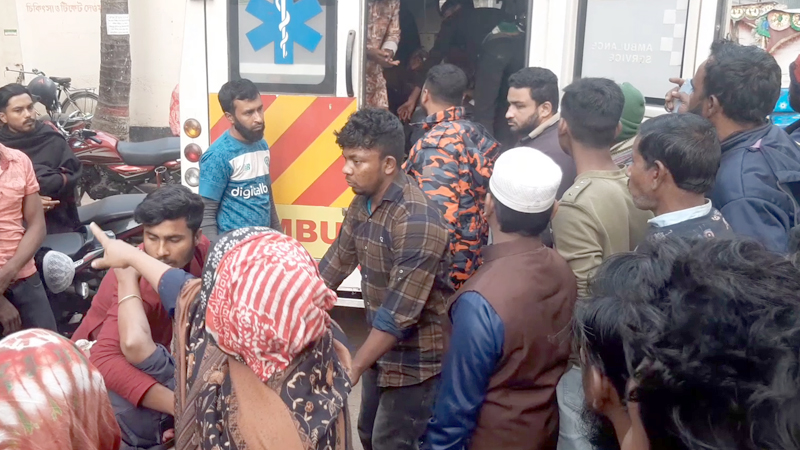
নেত্রকোনায় প্রাইভেটকার ও সিএনজিচালিত অটোরিকশার সংঘর্ষে পুলিশ সদস্যসহ দুইজন নিহত হয়েছেন। একই দুর্ঘটনায় আহত হয়েছেন আরও ৬ জন। শুক্রবার (২৬ জানুয়ারি) বিকেলে নেত্রকোনা-ময়মনসিংহ মহাসড়কের চল্লিশা ঝাউসী এলাকায় এ দুর্ঘটনা ঘটে।

নিহত পুলিশ সদস্য হলেন- জেলার বারহাট্রা উপজেলার ফকিরের বাজার তদন্ত কেন্দ্রের কনস্টেবল আজিজুল হাকিম। তার গ্রামের বাড়ি ময়মনসিংহের ফুলপুরে। এছাড়া নিহত অন্যজনের পরিচয় জানা যায়নি। আহতদের মধ্যে সঞ্জিত বর্মণ (৫৮) কে সনাক্ত করা গেছে। তার বাড়ি শাহাপাড়ার নাগ্রা।

নেত্রকোনা মডেল থানার এসআই মশিউল জানান, নেত্রকোনাগামী প্রাইভেটকারের সঙ্গে ময়মনসিংহগামী যাত্রীবোঝাই অটোরিকশার সংঘর্ষ হলে ঘটনাস্থলেই দুইজন নিহত ও ছয়জন আহত হন। নিহতরা অটোরিকশার যাত্রী ছিলেন। পরে স্থানীয়রা ও ফায়ার সার্ভিসের কর্মীরা আহতদের নেত্রকোনা সদর হাসপাতালে পাঠায়। সেখানে সঞ্জিত বর্মণসহ তিনজনের অবস্থা সংকটাপন্ন হওয়ায় উন্নত চিকিৎসার জন্য তাদের ময়মনসিংহ মেডিকেল কলেজ (মমেক) হাসপাতালে পাঠানো হয়।

নেত্রকোনায় সড়ক দুর্ঘটনায় পুলিশ সদস্যসহ নিহত ২

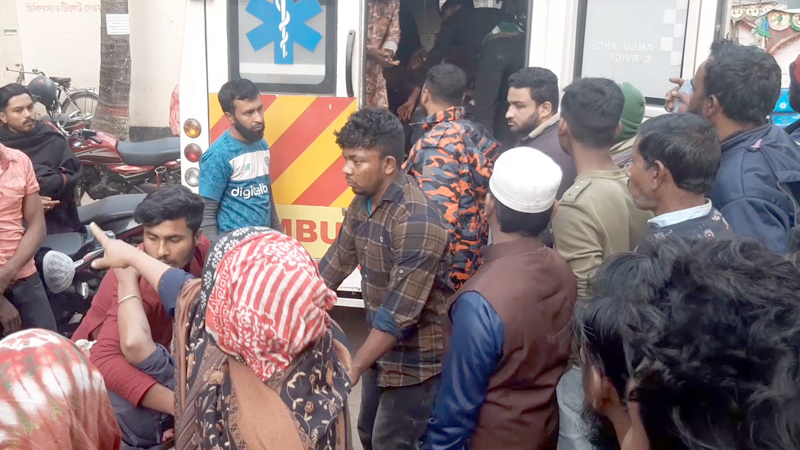
নেত্রকোনায় ঢাকা হতে আগত প্রাইভেটকার ও সিএনজিচালিত অটোরিকশার সংঘর্ষে পুলিশ সদস্যসহ দুইজন নিহত হয়েছেন। একই দুর্ঘটনায় আহত হয়েছেন আরও ৬ জন। সোমবার (৩১শে মার্চ) বিকেলে নেত্রকোনা-ময়মনসিংহ মহাসড়কের চল্লিশা ঝাউসী এলাকায় এ দুর্ঘটনা ঘটে।

নিহত পুলিশ সদস্য হলেন- জেলার বারহাট্রা উপজেলার ফকিরের বাজার তদন্ত কেন্দ্রের কনস্টেবল আজিজুল হাকিম। তার গ্রামের বাড়ি ময়মনসিংহের ফুলপুরে। এছাড়া নিহত অন্যজনের পরিচয় জানা যায়নি।গুরুতর আহতদের মধ্যে শাহাপাড়ার নাগ্রার সঞ্জিত বর্মণ (৫৮) ছাঁড়া অন্যদের সনাক্ত করা যায়নি। সঞ্জিত বর্মণ সহ তিনজনের অবস্থা আশঙ্কাজনক

নেত্রকোনা মডেল থানার এসআই মশিউল জানান, নেত্রকোনাগামী প্রাইভেটকারের সঙ্গে ময়মনসিংহগামী যাত্রীবোঝাই অটোরিকশার সংঘর্ষ হলে ঘটনাস্থলেই দুইজন নিহত ও পাঁচজন আহত হন। নিহতরা অটোরিকশার যাত্রী ছিলেন। পরে স্থানীয়রা ও ফায়ার সার্ভিসের কর্মীরা আহতদের নেত্রকোনা সদর হাসপাতালে পাঠায়। সেখানে তিনজনের অবস্থা সংকটাপন্ন হওয়ায় উন্নত চিকিৎসার জন্য তাদের ময়মনসিংহ মেডিকেল কলেজ (মমেক) হাসপাতালে পাঠানো হয়।

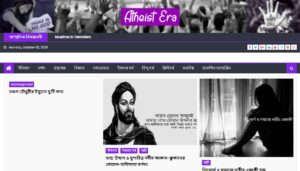
Criminal Case filed against Atheist Era magazine on the ground of blasphemy and other charges

A case on the ground of blasphemy has been filed in relation to the recent issue of a magazine called “Atheist Era”. The list of accused consists of 20 names including the Editor and other personnel of this magazine and the contributors/writers whose writing appeared on this issue.

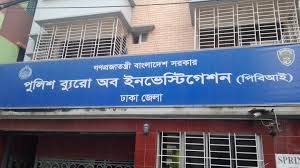
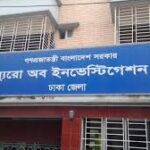
Magistrate Ahmed Humayun Kabir, sitting at Court No. 06 of the Chief Metropolitan Magistrates’ Court, took cognizance of the case under Section 295 of the Bangladesh Penal Code 1860 on 20 November. The complainant in this case is a Md. Yasin Alam Bhuiyan. The case (CR-234/2022) has been sent to the Superintendent of Police of the Police Bureau of Investigation for investigation. The Investigation Report is due on 29 December this year.

Referring to the petiton of the case, the court sources said that the magazine did not only contain filthy articles insulting Islam but also criticized the elements of Islam existing in the legal system of Bangladesh. By doing so, in effect, it spread slanders against the government of Bangladesh, the judiciary and the lagal system. Extremely humiliating write-ups about the Holy Prophet Muhammad have also been published in the same magazine. Recognition of homosexuals/bisexuals, change or abolition of laws in this regard and Islamic fundamentalism were the subject matters of the write-ups in this magazine.

The accused of this case are, Md Arman Hossain (Editor), Tanvir Ahmed, Jishan Tanvir Mostofa, Zobayer Hossain, Md Jakir Hossain, Md Asaduzzaman Khan Rony, Johny Chandra Saha, Md Mohiuddin Masud, Imrul Kayes, Md Zahirul Islam, Johnny Joseph Costa, Asif Islam, Mohaiminul Biswas Parvez, Kamal Chandra Sarkar, K M Mahfuzur Rahman, Md Rasel Miah, Abu Bakar Siddik, Md Abdul Razzak, Mohammed Moin Uddin Chowdhury, and Md Al Amin Kaisar.

When contacted, the complainant Mr. Bhuiyan did not hold back his frustration and anger with the accused in the case. He said, “This magazine has been spreading conspiracies and slander against Islam for a long time, both online and offline, against the laws of Bangladesh, the laws that emphasize Islamic consciousness and values, and against the government of Bangladesh. We have filed this case lawfully. They are not only attacking the Islam but also the Government of Bangladesh and the law and constitution of our beloved Awami government.  Especially, this atheists are plotting conspiracies against the existing law regarding atheists and homosexuals. As a supporter and activist of the Awami League I can tell that if these people are not brought under the law now our leader will be in great danger in future.”

Defamation Case Sparks Tension as Atheist Era Magazine Faces Legal Battle

In a significant development, the Chief Metropolitan Magistrate Court of the capital witnessed the filing of a defamation case against the editor of “Atheist Era” magazine, Md. Arman Hossain, and 19 others. The plaintiff, Md. Yasin Alam Bhuiyan, alleges that the magazine has long been disseminating conspiracy and slander against Islam, the laws of Bangladesh, and the government.

The case, registered under Section 295 of the Criminal Code, was assigned to Judge Mr. Ahmed Humayun Kabir in Court No. 16. The judge has directed the Superintendent of Police of the Police Bureau of Investigation to conduct an inquiry into the matter. The deadline for the investigation report is set for December 29, 2022.

The accused include prominent names such as Editor Arman Hossain, Tanveer Ahmed, Komol Chandra Das, Zeeshan Tanveer Mostafa, Muhaiminul Biswas Parvez, Zobair Hossain, Asif Islam, Jani Chandra Saha, Jony Joseph Costa, among others. Tensions surrounding the case have been palpable, with suppressed anger observed in some areas.

In an interview, the plaintiff, Mr. Md. Yasin Alam Bhuiyan, expressed strong indignation, stating, “They have not only expressed their opposition to Islam but have also launched an assault on the laws and constitution of the government of Bangladesh. Strict legal measures must be taken unless the safety of our leader and nation is to be jeopardized in the future.”

The plaintiff hinted at possible repercussions if justice is not served through legal channels, leaving the nature of these repercussions unspecified. Meanwhile, court sources reported a tight security system in place with a sizable crowd supporting the plaintiff, resonating with chants of “Naraye Takbir Allah Hu Akbar.”

Police sources declined to comment on the matter, and attempts to contact the defendants, including the Atheist Era magazine, went unanswered. The case, registered as CR – 234/2022, marks a contentious intersection of freedom of expression, religious sentiments, and legal consequences.

Progress made in the investigation of the sedition case against The Daily Nobojug

By Staff Reporter on 30/10/2022

Recent media reports around the case of sedition brought by a member of the Bangabandhu Lawyers’ Association against the controversial The Daily Nobojug and some of its comment-contributors/readers on issues such as the Al-Jazeera’s hour-long documentary “All the Prime-Minister’s Men” and the controversial death of writer Mushtaq Ahmed in prison suggest that the investigation against the accused is in full flow and details are emerging as to their motive behind their actions leading to the charges. The offending article was published on The Daily Nobojug on 27 March 2021.

On the condition of anonymity, a reliable source from PBI (Police Bureau of Invesitagtion), which has been tasked with the investigation of the charges by the Additional Chief Magistrate Md. Hasibul Haque of Dhaka Metropolitan Magistrate Court – 05 by way of an order issued on 25 August 2021, has confirmed to TheBDNews24 that, on preliminary investigation, most of the accused appear to be based overseas, mainly in Europe and the US and it is clear that they are working closely, covertly and sometimes explicitly, with the dominant parts of the Bangladesh Nationalist Party which is currently being led by exiled BNP leader Tarique Rahman, to upset the harmony within the country and to create chaos and disorder by spreading confusion and misinformation about the government, armed forces and the judiciary.

Some identities have now been uncovered – Md Razim Hossain,  Md Rukon Miah, Md Sabbir Hossain, Md Al Amin Kaisar, Md Masum Sajjad, Mohammad Shahidul Islam Jaigirdar, Md Ashif Hossain, and Ahsanul Huda Sarker. The responsible PBI team are tracking the whereabouts of these individuals and investigating these individuals’ local addresses. It is expected further progress will be made.

The investigation continues in this case (CR-120/2021).

Testimony in murder case over Rana Plaza collapse begins

A total of 594 people have been made witnesses in the case

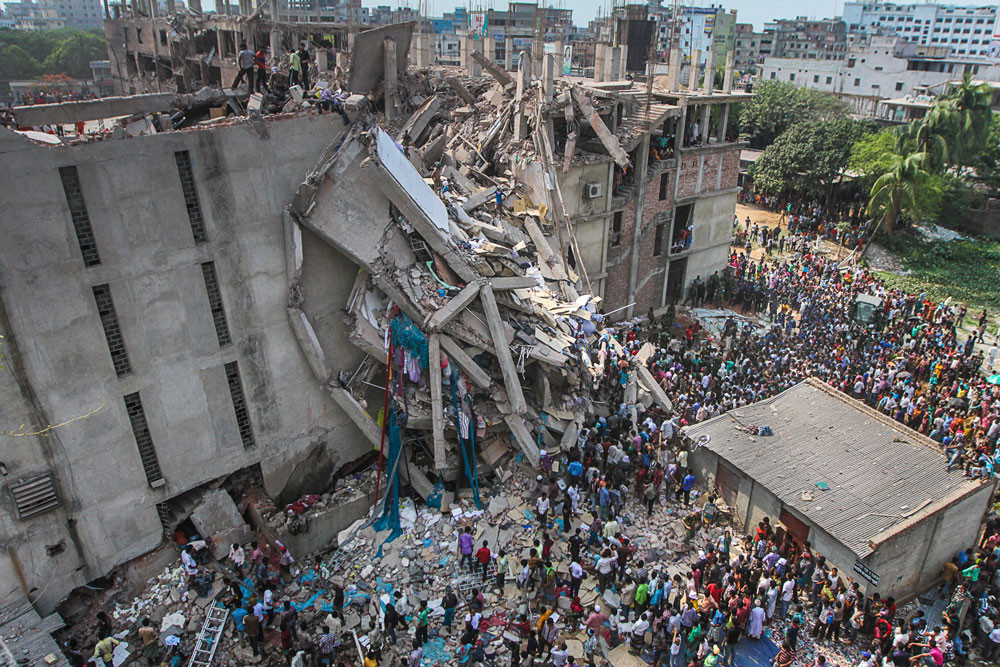
A Dhaka court on Monday finally began recording testimony of prosecution witnesses in the murder case lodged over the death of over 1,200 people in the tragic collapse of Rana Plaza building, around six years after the charge framing.

Plaintiff of the case and then sub-inspector of Savar police station Wali Ashraf testified at the court of Dhaka District and Sessions Judge AHM Habibur Rahman Bhuiyan.

Dhaka District and Sessions Judge SM Quddus Zaman on July 18, 2016 framed the charges against the 41 accused, including building owner Sohel Rana, in the murder case filed by police. But the proceedings of the case remained stalled since then because of the stay order issued by the High Court.

Police filed the case over murder because of negligence. The Criminal Investigation Department (CID) filed the charge sheet in the case on April 26, 2015 against 41 people.

A total of 594 people were made witnesses in the case.

Hundreds of people, mostly garment workers, were killed and over 2,500 injured in the building collapse on April 24, 2013.


Source: The Dhaka Tribune

 1,855 total views

OC Pradeep, inspector Liyakat to die for major Sinha murder

6 others awarded life term imprisonment, 7 acquitted

The Cox’s Bazar Sessions Judge Court on Monday sentenced former Teknaf police station officer-in-charge Pradeep Kumar Das and inspector Liakat Ali to death for murdering retired major Sinha Mohammad Rashed Khan on July 31, 2020. Judge Mohammad Ismail of the court pronounced the verdict in the afternoon also awarding six other people including three cops and three villagers to suffer life term rigorous imprisonment for committing the offence.

The life term imprisonment recipients are the then Teknaf police sub-inspector Nanda Dulal Rakshit, constables Rubel Sharma and Sagar Dev, and villagers Nurul Amin, Nizam Uddin, and Ayas Uddin.

The court also acquitted seven other accused in the case – the then Baharchhara police investigation centre assistant sub-inspector Liton Mia and constables Safanur Karim, Kamal Hossain and Abdullah Al Mamun and the then Cox’s Bazar-based Armed Police Battalion sub-inspector Shahjahan and constables Rajib and Abdullah, said Mohammad Jahangir, a lawyer representing the plaintiff of the case.

All the convicts and the acquitted ones heard the verdict from the dock.

Tight security measures were taken in and around the court premises on the occasion of pronouncement of the verdict.

The court observed that the murder was a pre-planned one.

While the court activities were in progress, a number of people, especially relatives of the people died in ‘gunfight’ incidents in Teknaf, outside the court premises formed a human chain demanding capital punishment for OC Pradeep and his cohorts for killing nearly dozens of people in Teknaf in the name of ‘gunfight’.

On January 12, the same court, following the case summing up arguments by both the prosecution and the defence lawyers, set Monday for delivering the verdict in the case against 15 accused.

Retired major Sinha was shot dead at the Shamlapur police checkpoint in Baharchhara Union of Cox’s Bazar while returning to Cox’s Bazar town on July 31, 2020, after filming for a documentary.

His sister Sharmen Shahria Ferdush filed the case with a Cox’s Bazar judicial magistrate court against nine members of law enforcement agencies, including Pradeep and Baharchhara police outpost inspector Liyakat Ali, on August 5, 2020.

On December 13, 2020, the Rapid Action Battalion submitted the charge sheet against 15 people — Pradeep, Liyakat, then Teknaf police sub-inspector Nanda Dulal Rakshit, constables Rubel Sharma and Sagar Dev, then Baharchhara police investigation centre assistant sub-inspector Liton Mia and constables Safanur Karim, Kamal Hossain and Abdullah Al Mamun, then Cox’s Bazar-based Armed Police Battalion sub-inspector Shahjahan and constables Rajib and Abdullah and villagers Nurul Amin, Nizam Uddin, and Ayas Uddin. All the accused are now in prisons.

On June 27, 2021, Cox’s Bazar court framed charges against the 15. All the police members named in the charge sheet were suspended following their arrest.

The court examined 65 of the 83 prosecution witnesses.

The charge sheet stated that Pradeep had plotted the murder nearly two weeks ago.

The battalion said that the three villagers were police informers and took part in the Sinha murder plot.

Source: New Age BD

 3,000 total views

Bangladesh shuts schools as coronavirus cases surge

DHAKA, Jan 21 (Reuters) – Bangladesh on Friday closed all schools and colleges for two weeks to counter an “alarming” rise in COVID-19 infections, just four months after ending a 1-1/2 year school closure imposed due to coronavirus.

The south Asian country reported 11,434 new cases on Friday, the biggest single-day jump since Aug. 9, pushing the positivity rate to 28.5%.

“We are seeing an uptick in infections in schools and colleges. This is really alarming,” Health Minister Zahid Maleque told reporters.

He added that public gatherings like political rallies and religious functions involving more than 100 people had been prohibited, although the duration of the ban was not immediately clear.

The healthcare system would be overwhelmed if the situation deteriorates further, Maleque said, adding more than a third of the hospital beds in the capital, Dhaka, have already been occupied by coronavirus patients.

Bangladesh has so far administered at least 151 million doses of vaccine since an inoculation drive began a year ago, with 47% of the population having had two shots.

Booster shots are administered to people over the age of 60 and healthcare and frontline workers.

The authorities have so far inoculated 2.89 million children aged 12-17 years.

Schools in Bangladesh reopened in September after one and half years, one of the world’s longest coronavirus shutdowns.

Authorities hope the closure of schools will help break chains of infection amid fears about the rapid spread of the omicron variant of the virus.

It can take days to confirm the strain of a virus through genomic sequencing, and Bangladesh has so far confirmed 62 Omicron cases. Since the pandemic first swept into Bangladesh in March 2020, the country has recorded 1,664,616 cases, including 28,192 deaths.

Source: Reuters