Bangladesh’s Law-and-Order Moment Ahead of the 2026 Election: What’s Happening, and Why the Legal Framework Matters

Abu Rahat Murshed Kabir | 21 December 2025

Bangladesh is entering an election season under the shadow of a question that is never merely technical: who can guarantee public safety without turning public order into political control? In January 2026, the security conversation has sharpened in ways that are difficult to ignore. Reports point to heightened concern about unrest, threats surrounding diplomatic facilities, and anxiety about violence as the February 12, 2026 general election approaches.

At the same time, this is not simply a story about street-level volatility. It is also a story about institutions and law: the constitutional promises Bangladesh makes to citizens, the statutory powers the state gives to police and security agencies, and the legal tests that determine when “maintaining order” becomes an excuse to shrink civic space. If you want to understand Bangladesh’s law-and-order reality today, you have to look at both layers together.

The present security climate: fear, uncertainty, and the politics of protection

In late January 2026, international attention has focused on security warnings connected to Bangladesh. Reuters reported that India decided to withdraw families and dependents of its diplomats from Bangladesh due to “mounting security concerns” ahead of the election. Separately, reporting has described repeated protests and disruption, including fear among international students and the destabilizing effects of shutdowns and unrest.

There are also claims and counterclaims about the capacity of the state to control violence. A recurring theme in recent coverage is the possibility of weapons circulating outside state control and the fear that political competition may become more violent in the run-up to voting. Even if you treat every such report with caution, the basic pattern is clear: public order is becoming a political issue because it affects the credibility of the electoral environment.

The constitutional baseline: Bangladesh’s promise of rights, and the state’s duty to protect

Bangladesh’s Constitution is not silent on public order. It anchors a citizen’s expectation that the state must both protect life and liberty and ensure that government power is exercised “in accordance with law.” Article 32 states that no person shall be deprived of life or personal liberty save in accordance with law.

That sounds straightforward, but in periods of tension it becomes the core dispute: what counts as “in accordance with law” when police are dispersing protests, when preventive detention is invoked, or when speech-related security laws are enforced? The constitutional idea is not that the state can never act strongly. It is that strong action must be legally grounded, proportionate, and reviewable.

The Constitution also recognises assembly rights, subject to “reasonable restrictions” in the interests of public order and other aims. This is the classic democratic balancing act: allow peaceful participation while restricting violence and threats. The practical challenge is how often, and how loosely, restrictions are used.

Policing powers: old statutes, modern realities

Bangladesh’s policing structure still rests heavily on colonial-era legal frameworks, including the Police Act, 1861. That matters because statutes shape supervision and discipline, and they define how force is organised. The Police Act’s design assumes a model of administrative control and a chain of command oriented toward maintaining order. In a modern democracy, that model must coexist with constitutional rights and judicial scrutiny.

Then there is criminal procedure: the Code of Criminal Procedure, 1898 (CrPC), still central to arrests, searches, investigations, and magistrate oversight. During unrest, the real-world effect is immediate. Questions such as “Was the arrest lawful?” or “Was detention extended properly?” or “Was a search conducted with required safeguards?” determine whether order is being maintained through law or through fear.

Elections and legitimacy: why “law and order” is never neutral

In an election context, “law and order” rhetoric tends to do two things at once:

  1. It can be a genuine call for security so citizens can vote without intimidation.

  2. It can become a political instrument to restrict opponents, choke assembly, or criminalise protest.

Bangladesh’s recent political transitions heighten that tension. Reporting has described the interim government’s political decisions, including a ban on activities of the Awami League under the Anti-Terrorism Act in 2025, illustrating how security law can be used in high-stakes political moments.

None of this automatically tells you whether a given action is justified. It does tell you what citizens should ask: What is the legal basis? Is it time-limited? Is there due process? Can courts review it? Are the rules being applied evenly?

The danger zone: when “public order” crowds out “public trust”

Public order is not only the absence of violence. It is also the presence of legitimacy. A state can reduce street disorder temporarily through heavy-handed tactics, but if people conclude that police power is partisan, the state may be creating future instability.

This is where constitutional rights matter most. Article 32’s promise of liberty “in accordance with law” is not just a phrase. It is supposed to function as a brake. When citizens fear arbitrary arrest, or when people believe speech laws are used selectively, they stop trusting the system, and they stop cooperating with it.

What to watch: five legal questions that will define the months ahead

If you’re tracking Bangladesh’s law-and-order trajectory toward the February 2026 election, the most useful lens is legal and procedural:

  1. Use of arrest and remand: Are CrPC powers used narrowly and with documented grounds, or broadly to disrupt opponents?

  2. Management of assemblies: Are restrictions tailored to violence risk, or used to suppress peaceful mobilisation?

  3. Preventive measures: Is preventive detention invoked, and if so, are constitutional safeguards followed?

  4. Anti-terror framework: Are “national security” claims tied to credible threats or stretched to cover ordinary political activity?

  5. Digital enforcement: Are cyber laws used to curb incitement and disinformation, or to silence critics?

Bangladesh’s present moment is not just a security problem. It is a constitutional test. And in constitutional tests, the details matter: legal basis, proportionality, oversight, and equality before the law.

ECONOMIC DISRUPTION AND ACCELERATION OF CORRUPTION DURING THE TRANSITIONAL PERIOD

Mohammd Zahin

Bangladesh’s economy entered the post–5 August phase carrying unresolved vulnerabilities: foreign reserve depletion, inflation, banking-sector fragility, and investor uncertainty. Transitional instability magnified these issues, creating fertile ground for corruption, market manipulation, and economic exploitation.

This article analyzes how the governance crisis intensified economic hardship, institutional corruption, and uneven wealth extraction.

1. Vulnerable Economic Foundations Before the Transition

Years of structural economic weaknesses left Bangladesh exposed:

  • Banking scandals had already eroded public confidence

  • Government borrowing and debt obligations increased

  • Foreign investment slowed due to political uncertainty

  • Inflation rose due to global shocks and local mismanagement

  • Trade deficits widened

These conditions meant any political transition—peaceful or turbulent—would create economic aftershocks.

2. Market Shock After 5 August: Immediate Economic Effects

Immediately after the transition:

  • Liquidity tightened as depositors withdrew savings

  • Importers faced delays in LCs due to currency instability

  • Business confidence declined sharply

  • Transport disruptions increased logistical costs

  • Prices of essentials skyrocketed

These were not intentional outcomes but rather the natural consequences of uncertainty and weakened administrative control.

3. Rise of Opportunistic Market Manipulation

In periods of instability, markets become easier to exploit.

a. Syndicates Accelerated Price Manipulation

  • Artificial shortages of rice, oil, sugar

  • Hoarding of basic commodities

  • Rapid price hikes in both retail and wholesale markets

  • Smuggling of essentials across borders

Weak market monitoring allowed syndicates to operate with impunity.

b. Corruption in Subsidy and Relief Distribution

Reports indicated:

  • Misallocation of relief goods

  • Local-level political capture of food aid

  • Bribes demanded for access to social safety nets

  • Diversion of subsidized goods into black markets

Such corruption intensified public frustration.

c. Banking Sector Instability

Banks experienced:

  • Increased non-performing loans

  • Poor oversight as regulatory attention shifted to political stability

  • Collusion in loan approvals

  • Money laundering through under-invoicing and over-invoicing

Financial institutions became vulnerable to predatory behavior.

4. Breakdown of Revenue Systems and the Rise of Informal Extraction

Customs and Ports

Corruption surged due to:

  • Reduced central oversight

  • Officers exploiting confusion

  • Rise of informal payments to clear goods faster

Local Government Revenue

Municipalities saw:

  • Informal toll collection

  • Unauthorized taxes

  • Extortion in markets and transport hubs

Land Administration

Weak supervision enabled:

  • Illegal land occupation

  • Irregular land transfers with forged documents

  • Bribery for mutation and registration

These practices represent structural governance failure.

5. Investment Freeze and Capital Flight

Investors—both domestic and foreign—responded to transitional instability by:

  • Canceling scheduled investments

  • Pausing manufacturing expansion

  • Moving funds to safer jurisdictions

  • Delaying startup launches and export contracts

The garment industry, the backbone of exports, suffered from:

  • Delayed shipments

  • Worker unrest

  • Supply-chain disruptions

  • Lower buyer confidence

Investor sentiment hinges on predictability; during this period, predictability was absent.

6. Widening Inequality: How Transitional Instability Hurt Ordinary Citizens

Economic hardship disproportionately impacted:

  • Daily wage earners

  • Small traders

  • Farmers

  • Informal-sector workers

  • Low-income urban households

Their challenges included:

  • High food prices

  • Loss of employment

  • Reduced purchasing power

  • Limited access to healthcare

  • Increased reliance on debt

Meanwhile, economic opportunists benefited from:

  • Market manipulation

  • Informal toll systems

  • Arbitrage in essential goods

  • Corruption-enabled resource capture

This widened the gap between elite groups and vulnerable citizens.

7. Pathways to Economic Stabilization

Bangladesh requires:

  • Anti-corruption audit teams independent of political influence

  • Restoration of investor confidence through policy continuity

  • Strengthening central bank autonomy

  • Price monitoring mechanisms

  • Reforms in customs, VAT, and land governance

  • Transparency tools for procurement

  • Social-protection expansion for the most vulnerable

Economic stability requires institutional—not personal—solutions.

Conclusion

Corruption and economic disruption after 5 August were the result of institutional fragility amplified by political uncertainty. The crisis revealed the urgent need for durable, depoliticized economic governance capable of surviving leadership transitions.

ARTICLE 3 — SOCIAL UNREST, HUMAN-RIGHTS RISKS, AND PUBLIC INSECURITY DURING THE POST–5 AUGUST PERIOD

Introduction

The post–5 August period marked one of the most unstable phases in Bangladesh’s social landscape. With the public unsure of the direction of the state, longstanding social tensions resurfaced, new conflicts emerged, and human-rights conditions deteriorated due to weakened oversight.

This article examines the social dimensions of unrest during this period: community violence, breakdown of mediation systems, targeting of minorities, gender-based violence, and erosion of civic safety.

1. Social Tension Under Transitional Uncertainty

Transitions create fear. Fear creates rumors. Rumors create violence.

In Bangladesh, pre-existing polarization meant any leadership change—no matter the type—risked igniting dormant tensions.

Factors fueling unrest included:

  • Revenge violence between partisan groups

  • Breakdown of local dispute-resolution systems

  • Misinformation campaigns on social media

  • Distrust in law enforcement

  • Uncertainty about future political alignments

Violence was not coordinated by a single actor; it emerged from a vacuum of authority.

2. Escalation of Community-Level Violence

Political Clashes

After 5 August:

  • Political activists clashed with opponents

  • Supporters of different factions engaged in turf battles

  • Vandalism targeted party offices, homes, and businesses

Mob Justice

Weak policing triggered:

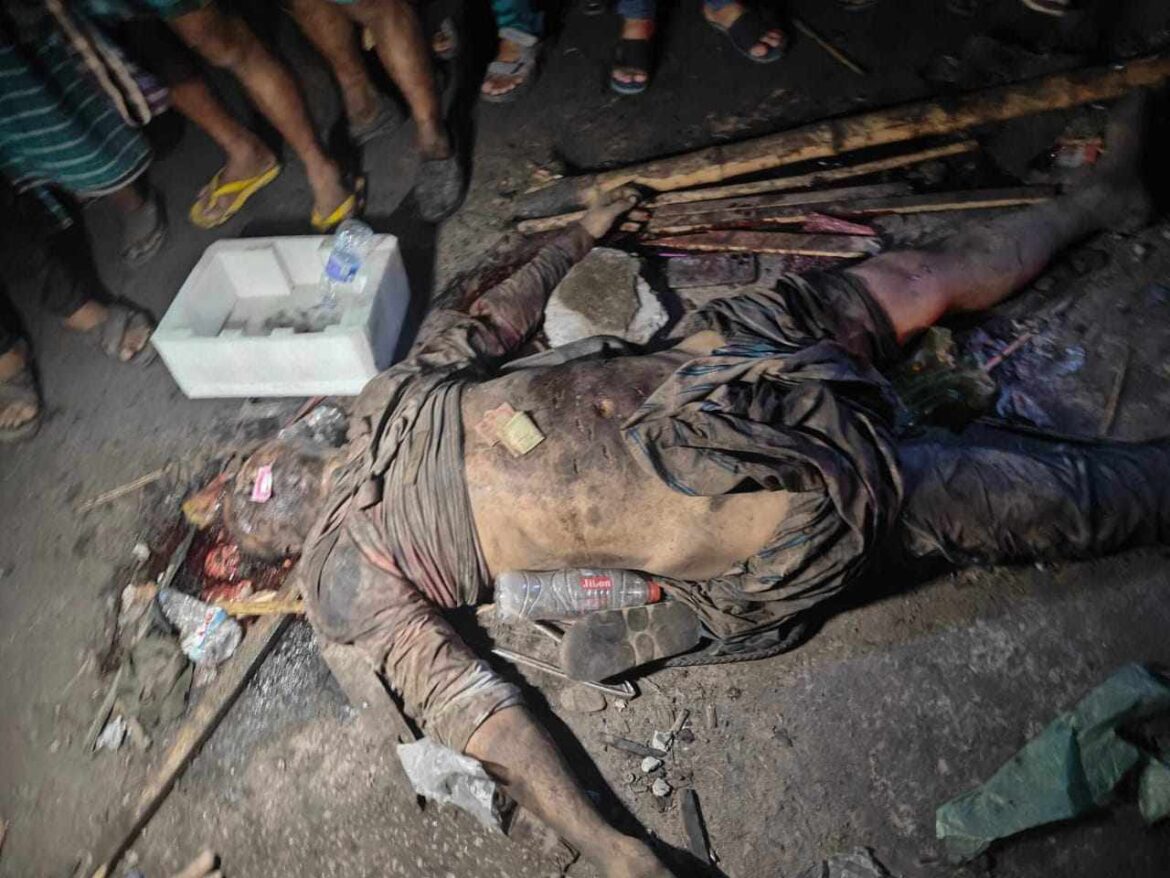
  • Public lynchings

  • Vigilante groups

  • Attacks based on rumors of theft, blasphemy, or political affiliation

Looting

Markets, shops, and transport vehicles faced:

  • Coordinated looting by criminal groups

  • Opportunistic theft by local gangs

  • Destruction of property during protests

3. Increased Risks for Women and Marginalized Groups

Periods of instability often increase gender-based violence. Reports highlighted:

  • Rise in sexual harassment and assault

  • Domestic violence escalation due to economic strain

  • Limited access to police protection

  • Difficulties accessing justice mechanisms

Minority communities faced:

  • Targeted intimidation

  • Attacks on places of worship

  • Forced displacement

  • Property destruction

Such incidents reflect systemic vulnerability, not the intent of transitional leadership.

4. Weakening of Human-Rights Monitoring Mechanisms

Human-rights organizations reported:

  • Reduced access to detention centers

  • Difficulty tracking extrajudicial violence

  • Slow or absent investigations

  • Breakdowns in documentation processes

Transitional governments often deprioritize rights protection in favor of political stabilization. This occurred here as well.

5. Media, Misinformation, and Public Panic

Misinformation Circulated Rapidly

Rumors included:

  • False reports of political reprisals

  • Invented stories of community attacks

  • Claims of impending state collapse

  • Manipulated videos to incite violence

Media Under Pressure

Journalists faced:

  • Threats from political groups

  • Restricted access to conflict zones

  • Self-censorship

The information vacuum magnified public fear.

6. Breakdown of Social Cohesion

Neighborhoods fragmented because:

  • People feared association with political factions

  • Trust between communities weakened

  • Economic hardship deepened social resentment

  • Religious tensions were exploited by opportunists

Social cohesion—an essential part of peace—was severely strained.

7. Rebuilding Social Stability: Necessary Steps

Bangladesh requires:

  • Community reconciliation programs

  • Protection mechanisms for vulnerable groups

  • Independent human-rights monitoring

  • Rapid legal reforms to protect victims

  • Media literacy campaigns

  • Revival of local mediation councils

  • Depoliticization of security forces

Transition periods must prioritize human security above all else.

Conclusion

The unrest following 5 August was not a product of personal leadership failure but a symptom of deep societal fractures exacerbated by institutional weakness. Durable stability will require rebuilding trust, strengthening rights protections, and restoring credibility in state institutions.

GOVERNANCE VACUUM AND STATE CAPACITY BREAKDOWN AFTER 5 AUGUST

Mohammad Zahin, Special Report

The political transition following 5 August created one of the most turbulent governance periods in Bangladesh’s recent history. A nation long accustomed to strong executive authority suddenly found itself navigating an uncertain administrative structure, unclear chains of command, overstretched institutions, and a crisis of public trust. Although any transitional authority faces challenges, the scale and speed of Bangladesh’s deterioration exposed deeper structural weaknesses: fragile institutions, politicized administration, limited rule-of-law independence, and deep-rooted mistrust between citizens and the state.

This article examines how institutional instability during the post–5 August phase contributed to corruption risks, escalated violence, slowed service delivery, and generated a sense of pervasive uncertainty. It does not assign personal blame, but rather analyses the systemic issues that made the period volatile.

1. The Governance Vacuum: A Structural Weakness Decades in the Making

Bangladesh’s political system has long revolved around strong centralized authority. When that authority weakens abruptly, three things happen:

  1. Institutional paralysis

  2. Decision-making bottlenecks

  3. Rapid fragmentation of accountability

Following 5 August, ministries, law enforcement agencies, and local administrations faced conflicting directives, unclear roles, and shifting reporting lines. Many officials reportedly adopted a “wait-and-see” posture, avoiding decisions that might later be scrutinized or reversed. This “administrative freeze” is a common feature of transitional democracies, but in Bangladesh it generated cascading disruption:

  • Delays in public procurement

  • Stalled infrastructure projects

  • Untouched corruption complaints

  • Inaction on local violence

  • Absence of coordinated crisis response

The collapse of administrative certainty enabled a spike in opportunistic behaviors, including looting, land grabbing, political score-settling, and local-level extortion.

2. Law Enforcement Under Stress: Lack of Coordination and Operational Clarity

A functioning state requires predictable law enforcement. After 5 August:

  • Some police units withdrew from streets fearing retaliation

  • Others acted independently without oversight

  • Coordination with district administration declined

  • Rapid Action Battalion operations slowed significantly

  • Emergency response systems became inconsistent

This inconsistency created opportunities for criminal groups and political opportunists to exploit power vacuums. Social media footage of vandalism, mob justice, arson, and targeted assaults reflected a system where deterrence collapsed.

Without clear chain-of-command, “law enforcement discretion” expanded dramatically—sometimes used responsibly, sometimes abused, and often simply absent.

3. Rise in Local Power Brokers and Informal Governance

When formal institutions weaken, informal power accelerates. After 5 August:

  • Local musclemen asserted territorial control

  • Political youth groups reactivated dormant networks

  • Extortion groups emerged around transport hubs

  • Rural disputes escalated into violence due to absent arbitration

  • Cross-party opportunists exploited shifting loyalties

This shift from formal to informal governance magnified corruption and insecurity. Citizens increasingly relied on local enforcers rather than the state, creating a climate where justice depended on power, not law.

4. Administrative Corruption: How Transitional Uncertainty Fuels Abuse

Corruption tends to spike in transitional periods because:

  1. Oversight weakens

  2. Procedural checks are relaxed

  3. Officials expect rapid turnover

  4. Short-term extraction replaces long-term policy

Reports from civil society groups, investigative journalists, and economic monitors indicated:

  • Accelerated bribery in licensing, land permissions, and police clearances

  • Irregularities in public procurement as monitoring agencies stalled

  • Informal payments becoming normalized in health and education services

  • Widening gap between official directives and street-level bureaucracy

Even if leadership discouraged corruption, the system lacked the capacity to enforce discipline across thousands of administrative nodes.

5. Social Unrest: Triggered by Fear, Exploited by Opportunists

The period witnessed:

  • Street clashes

  • Looting of shops and transport vehicles

  • Attacks on minority communities

  • Targeted violence against political rivals

  • Demonstrations turning into riots

Drivers included:

  • Fear of future repression depending on who gains power

  • Economic frustration due to inflation and unemployment

  • Politicization of student and youth groups

  • Social media misinformation accelerating panic

  • Absence of mediating institutions such as local councils or party structures

Unrest was not the product of a single cause or group—it emerged from systemic breakdown combined with public anxiety.

6. Public Trust Erosion: Citizens Left Without Predictability

Public trust declined because:

  • People could not rely on police protection

  • Courts struggled with caseload surges and administrative delays

  • Banks experienced liquidity anxieties

  • Prices of essentials fluctuated wildly

  • Public-health and municipal services slowed

When predictability disappears, people assume the worst. In such climates, rumors fuel conflict, markets destabilize, and individuals adopt self-protective behavior that further strains the system.

7. What Structural Reforms Are Needed

To prevent future governance collapse during transitions, Bangladesh would require:

  1. Decentralized administrative authority

  2. Nonpartisan civil service reform

  3. Clear legal framework for interim governance

  4. Strengthening of local-government institutions

  5. Independent oversight of law enforcement

  6. Depoliticization of public procurement

  7. Digitization of administrative processes

These structural changes—not leadership changes—determine long-term stability.

Conclusion

The post–5 August situation in Bangladesh exposed deep systemic weaknesses. Instead of framing it as the failure of an individual, it is more accurate to describe it as the failure of institutions unprepared for abrupt transition. Governance vacuums generate corruption, violence, and public disorder not because of personal motives, but because institutions lack resilience.