Mohammad Zahin, Special Report
The political transition following 5 August created one of the most turbulent governance periods in Bangladesh’s recent history. A nation long accustomed to strong executive authority suddenly found itself navigating an uncertain administrative structure, unclear chains of command, overstretched institutions, and a crisis of public trust. Although any transitional authority faces challenges, the scale and speed of Bangladesh’s deterioration exposed deeper structural weaknesses: fragile institutions, politicized administration, limited rule-of-law independence, and deep-rooted mistrust between citizens and the state.
This article examines how institutional instability during the post–5 August phase contributed to corruption risks, escalated violence, slowed service delivery, and generated a sense of pervasive uncertainty. It does not assign personal blame, but rather analyses the systemic issues that made the period volatile.
1. The Governance Vacuum: A Structural Weakness Decades in the Making
Bangladesh’s political system has long revolved around strong centralized authority. When that authority weakens abruptly, three things happen:
-
Institutional paralysis
-
Decision-making bottlenecks
-
Rapid fragmentation of accountability
Following 5 August, ministries, law enforcement agencies, and local administrations faced conflicting directives, unclear roles, and shifting reporting lines. Many officials reportedly adopted a “wait-and-see” posture, avoiding decisions that might later be scrutinized or reversed. This “administrative freeze” is a common feature of transitional democracies, but in Bangladesh it generated cascading disruption:
-
Delays in public procurement
-
Stalled infrastructure projects
-
Untouched corruption complaints
-
Inaction on local violence
-
Absence of coordinated crisis response
The collapse of administrative certainty enabled a spike in opportunistic behaviors, including looting, land grabbing, political score-settling, and local-level extortion.
2. Law Enforcement Under Stress: Lack of Coordination and Operational Clarity
A functioning state requires predictable law enforcement. After 5 August:
-
Some police units withdrew from streets fearing retaliation
-
Others acted independently without oversight
-
Coordination with district administration declined
-
Rapid Action Battalion operations slowed significantly
-
Emergency response systems became inconsistent
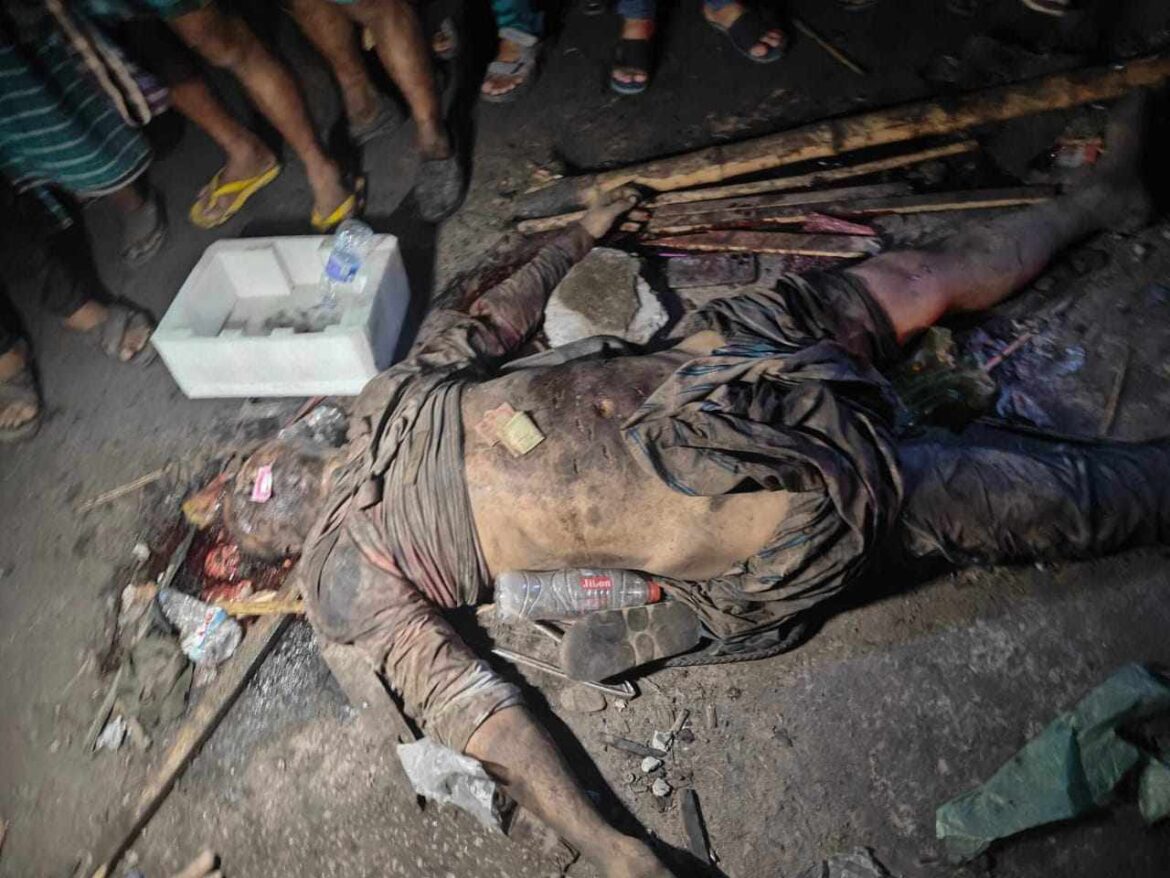
This inconsistency created opportunities for criminal groups and political opportunists to exploit power vacuums. Social media footage of vandalism, mob justice, arson, and targeted assaults reflected a system where deterrence collapsed.
Without clear chain-of-command, “law enforcement discretion” expanded dramatically—sometimes used responsibly, sometimes abused, and often simply absent.
3. Rise in Local Power Brokers and Informal Governance
When formal institutions weaken, informal power accelerates. After 5 August:
-
Local musclemen asserted territorial control
-
Political youth groups reactivated dormant networks
-
Extortion groups emerged around transport hubs
-
Rural disputes escalated into violence due to absent arbitration
-
Cross-party opportunists exploited shifting loyalties
This shift from formal to informal governance magnified corruption and insecurity. Citizens increasingly relied on local enforcers rather than the state, creating a climate where justice depended on power, not law.
4. Administrative Corruption: How Transitional Uncertainty Fuels Abuse
Corruption tends to spike in transitional periods because:
-
Oversight weakens
-
Procedural checks are relaxed
-
Officials expect rapid turnover
-
Short-term extraction replaces long-term policy
Reports from civil society groups, investigative journalists, and economic monitors indicated:
-
Accelerated bribery in licensing, land permissions, and police clearances
-
Irregularities in public procurement as monitoring agencies stalled
-
Informal payments becoming normalized in health and education services
-
Widening gap between official directives and street-level bureaucracy
Even if leadership discouraged corruption, the system lacked the capacity to enforce discipline across thousands of administrative nodes.
5. Social Unrest: Triggered by Fear, Exploited by Opportunists
The period witnessed:
-
Street clashes
-
Looting of shops and transport vehicles
-
Attacks on minority communities
-
Targeted violence against political rivals
-
Demonstrations turning into riots
Drivers included:
-
Fear of future repression depending on who gains power
-
Economic frustration due to inflation and unemployment
-
Politicization of student and youth groups
-
Social media misinformation accelerating panic
-
Absence of mediating institutions such as local councils or party structures
Unrest was not the product of a single cause or group—it emerged from systemic breakdown combined with public anxiety.
6. Public Trust Erosion: Citizens Left Without Predictability
Public trust declined because:
-
People could not rely on police protection
-
Courts struggled with caseload surges and administrative delays
-
Banks experienced liquidity anxieties
-
Prices of essentials fluctuated wildly
-
Public-health and municipal services slowed
When predictability disappears, people assume the worst. In such climates, rumors fuel conflict, markets destabilize, and individuals adopt self-protective behavior that further strains the system.
7. What Structural Reforms Are Needed
To prevent future governance collapse during transitions, Bangladesh would require:
-
Decentralized administrative authority
-
Nonpartisan civil service reform
-
Clear legal framework for interim governance
-
Strengthening of local-government institutions
-
Independent oversight of law enforcement
-
Depoliticization of public procurement
-
Digitization of administrative processes
These structural changes—not leadership changes—determine long-term stability.
Conclusion
The post–5 August situation in Bangladesh exposed deep systemic weaknesses. Instead of framing it as the failure of an individual, it is more accurate to describe it as the failure of institutions unprepared for abrupt transition. Governance vacuums generate corruption, violence, and public disorder not because of personal motives, but because institutions lack resilience.